Shooting & Passing Controls Guide
Learn how the line-drawing mechanic works in Be a Soccer Legend for finishing shots, delivering crosses into the box, and threading through balls.
How the Draw-to-Play Mechanic Works
Be a Soccer Legend handles the advertised shooting and passing actions through a single input rule stated in the official description: draw a line from the ball to shoot, pass, cross, or play a through ball, and where your line ends, the ball goes. Because the official instructions make the endpoint your intended destination, your main job in every play sequence is choosing the right destination on the pitch or inside the goal.
When you are positioned to score, you can execute standard finishes as well as bicycle kicks, volleys, and long-range rockets. Regardless of the animation your player uses, the endpoint is the central aiming instruction given by the developer. As practical aiming advice, inspect the goalkeeper and available target before choosing your endpoint. Exact shot success formulas are unverified.
Delivering Crosses Into the Box
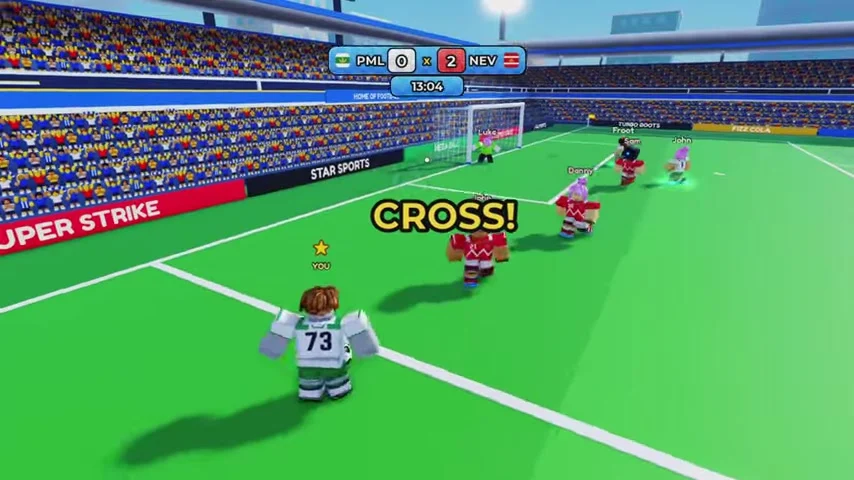
Not every attacking chance starts in front of the net. When the ball is out wide on the wing and an attacker is moving toward the penalty area, the game displays a CROSS prompt on screen. A cross is a delivery pass meant for a teammate inside the box rather than a direct shot at the goalkeeper.
- As practical advice, inspect the penalty area and teammate positions when CROSS appears.
- Use the developer鈥檚 draw-from-the-ball instruction to choose a delivery destination.
- Follow the next on-screen prompt after the delivery. This guide does not promise the same follow-up input for every scenario.
For a CROSS prompt, check where teammates are positioned before choosing a destination. Treat the prompt as your cue to become the playmaker first and the finisher second.
Threading Through Balls Past Defenders
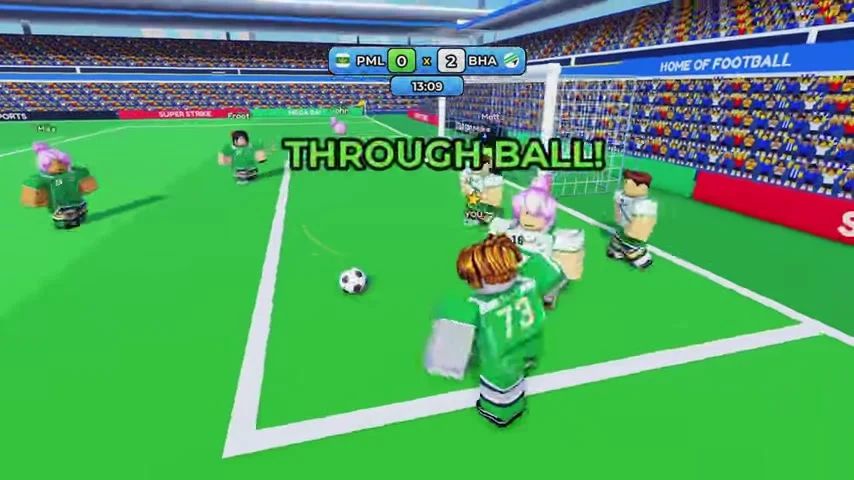
During central build-up play or counterattacks, you will see a THROUGH BALL prompt appear while your player has possession. In soccer, a through ball is a pass sent into open grass behind or between defenders so a forward can run onto it without breaking stride.
Because the ball travels to the exact spot where your line ends, a useful approach to a THROUGH BALL prompt is to consider the space ahead of the runner. The footage does not establish a universal timing or interception formula. Instead, watch the direction your teammate is sprinting, find the open lane between defenders, and end your line in the empty space ahead of the runner.
| On-Screen Prompt | Primary Objective | Where to End Your Line |
|---|---|---|
| Shooting Sequence | Beat the goalkeeper and score | Inside the goal frame, away from the keeper or directly on a target ring |
| CROSS | Deliver the ball from out wide to an attacker in the box | In the penalty area slightly ahead of your teammate's run |
| THROUGH BALL | Split the defense for a forward sprinting toward goal | Open grass ahead of the runner, away from closing defenders |
Handling Miss Allowances and Failed Plays
Every drawn line carries weight because matches enforce strict conversion targets. Before you play a fixture, the prematch screen tells you how many Goal chances you will receive, how many you need To win, and how many Misses allowed you have. In a recorded Iberia Cup match, for example, the rules demanded converting ALL 4 out of 4 chances with Misses allowed set to NONE.
When Misses allowed is NONE, the displayed objective leaves no allowed miss. The reviewed frame does not establish every failure animation or retry penalty. If your prematch card shows zero misses allowed, prioritize safe, clean completions over risky tight-angle attempts. On passing prompts, give yourself extra margin away from defenders' feet; on shots, pick the widest open side of the goal.